
Share this story, choose your platform!
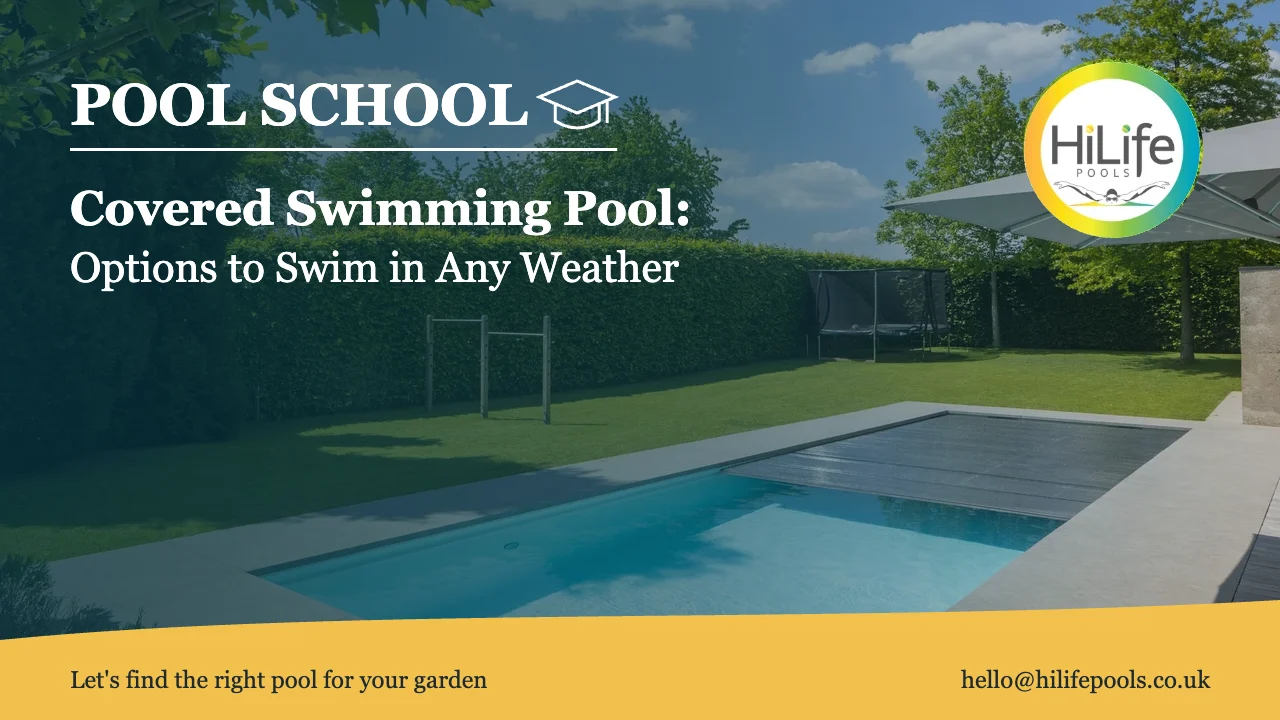
An outdoor pool in a British garden is a wonderful thing on a sunny July afternoon. The rest of the year, the weather can make it harder to enjoy. That is why so many homeowners ask about a covered swimming pool: a pool that is protected from the rain, wind, leaves and cold, so it stays cleaner, warmer and usable for more of the year.
“Covered” can mean many different things, from a simple cover that sits on the water to a full pool house with its own heating and ventilation. In this guide we walk through the main options, what each one is like to live with, the questions to think about before you choose and how to get the most from your pool whatever the weather.
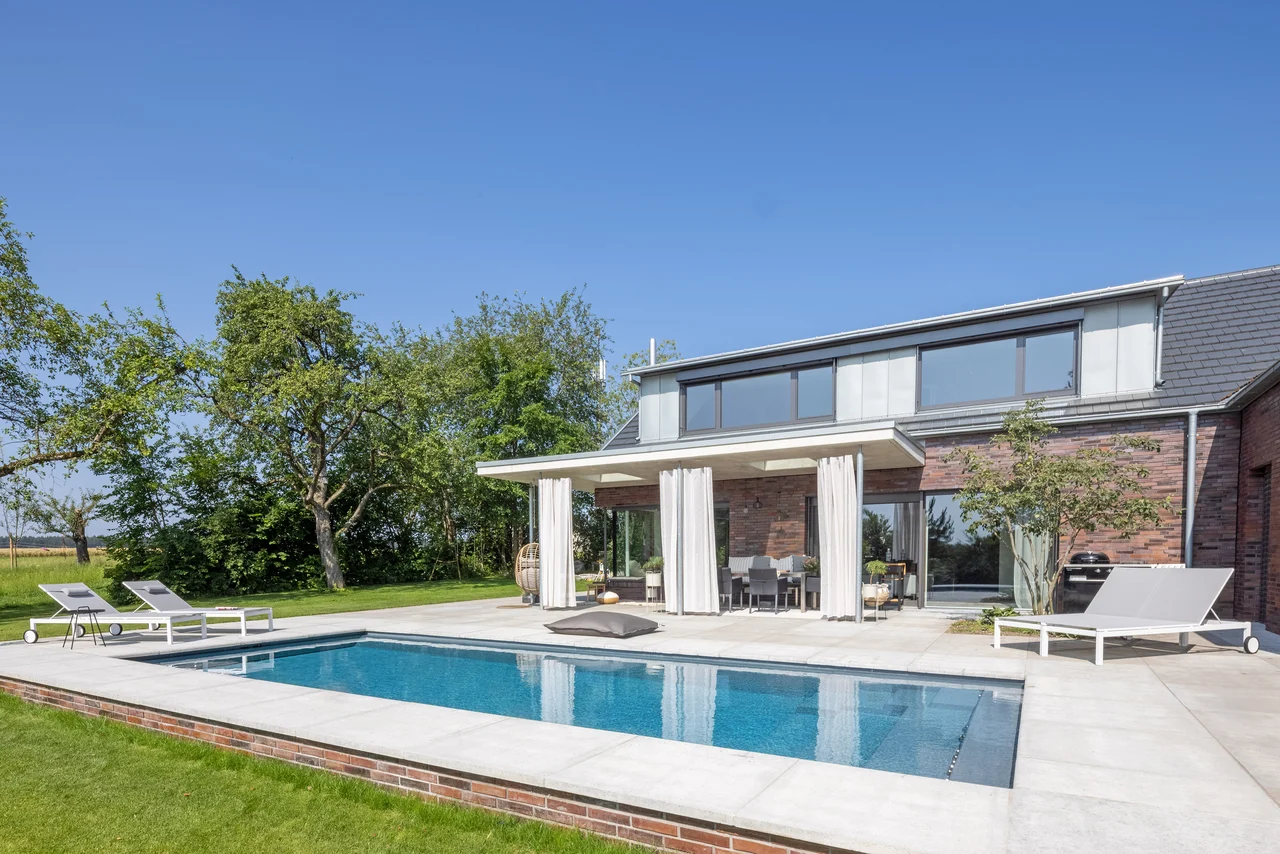
Why Choose a Covered Swimming Pool?
Covering your pool, in whatever form suits you, brings a long list of benefits:
- Warmer water. Most heat is lost from the surface of the pool. A cover or enclosure traps that heat, so you spend less on heating.
- A longer swimming season. Some options turn a summer pool into a pool you can use from early spring to late autumn, or even all year.
- Cleaner water. Leaves, insects and debris stay out, which means less cleaning and fewer chemicals.
- Less evaporation. You lose less water and need fewer top-ups.
- Safety. The right cover can stop children and pets falling into the water when the pool is not in use.
- Lower running costs. Less heating, less cleaning and fewer chemicals all add up.
The Main Types of Covered Swimming Pool
There are broadly two approaches: covers that sit on or just above the water, and structures that enclose the pool. Many owners use both together.
Solar and thermal covers
A floating bubble cover is the simplest and most affordable way to cover a pool. It traps heat, cuts evaporation and lets the sun warm the water. It does not stop people falling in, and it needs to be pulled on and off, often with a roller.
Automatic slatted covers
Slatted covers are made of interlocking buoyant slats that roll out across the water at the turn of a key. They sit neatly in a recess or under a bench when not in use. They keep heat in and debris out, and some are strong enough to support a child’s weight. For many families they are the most practical everyday option. Read more in our article on automatic pool covers.
Safety covers
Safety covers are designed first and foremost to stop accidents. They are usually tensioned across the pool and anchored to the surround, and are tested to take a certain weight. They are a good choice for homes with young children, grandchildren or pets.
Low-level enclosures
A low enclosure is a glazed or polycarbonate structure that sits close to the water. It is not tall enough to stand in, but it acts like a greenhouse, warming the pool and keeping it clean. Many are telescopic, so sections slide over each other to open the pool up on warm days.
High enclosures and telescopic pool covers
Taller enclosures let you swim and stand underneath, and some include space around the pool for loungers. Telescopic versions slide back so you can enjoy open-air swimming in summer and a sheltered pool the rest of the year. Our guide to swimming pool enclosures looks at these in more detail.
Retractable roofs and pool houses
At the top end, a pool house with a retractable or opening roof gives you the best of both worlds: indoor comfort in winter and fresh air in summer. A fully enclosed pool building with heating, ventilation and dehumidification effectively becomes an indoor pool.
Covered Swimming Pool Options at a Glance
- Floating solar cover: lowest cost, keeps heat in, manual, no safety benefit.
- Automatic slatted cover: easy everyday use, good heat retention, can improve safety.
- Safety cover: designed to prevent accidents, ideal for families.
- Low enclosure: extends the season, keeps the pool very clean, cannot stand inside.
- High or telescopic enclosure: swim under cover, open up in summer.
- Pool house or indoor pool: year-round swimming, the biggest investment.
Things to Think About Before You Choose
How you want to use the pool
Start with how and when you want to swim. If you mainly use the pool in summer and want lower bills, a good cover may be all you need. If you want to swim from March to October, an enclosure starts to make sense. If you dream of a morning swim in January, you are probably looking at an indoor pool or pool house.
Your garden and views
Enclosures and pool houses are significant structures. Think about how they will look from the house, how much light they will block and whether you want to keep views across the garden. Clear glazing and low-profile designs can help a lot.
Planning permission
Covers that sit on the water do not usually need permission. Enclosures and pool buildings may, depending on their size, height and position, and whether your home is listed or in a conservation area. It is always worth checking with your local council before you commit.
Ventilation and condensation
Warm water under a roof creates humid air. Low and telescopic enclosures can usually be opened to let air through, but a fully enclosed pool needs proper ventilation and dehumidification to protect the building and keep the air comfortable.
Safety
Not every cover is a safety cover. If keeping children or pets safe is a priority, choose a product designed and tested for that purpose, and still never leave children unsupervised around water.
Budget and running costs
The upfront cost ranges from very modest for a floating cover to a major investment for a pool house. Remember to weigh this against the savings in heating, cleaning and chemicals, and the extra months of swimming you gain.
How a Covered Swimming Pool Saves Energy
An uncovered outdoor pool loses heat constantly, mostly through evaporation from the surface. Simply covering the water when it is not in use can make a dramatic difference to how hard your heat pump has to work. Enclosures go further by trapping warm air above the water and using solar gain to warm the pool on bright days. Combined with a well-insulated pool shell and an efficient heat pump, a covered pool can be surprisingly economical to run.
Combining Covers and Enclosures
Many owners use more than one layer of protection. A common set-up is an automatic slatted cover on the water inside a telescopic enclosure. The slatted cover keeps heat in overnight and adds a safety layer, while the enclosure extends the season and keeps the pool clean. On sunny summer days, both can be opened up for proper outdoor swimming.
Looking After a Covered Pool
- Keep the cover clean. Brush or hose off leaves and dirt so they do not end up in the water when the cover is opened.
- Check water balance. Covered pools can need slightly different chemical levels, as less chlorine is lost to sunlight. Test regularly.
- Ventilate enclosures. Open sections on warm days to let moisture out.
- Service moving parts. Automatic covers and telescopic enclosures need occasional checks to keep them running smoothly.
Covered Pools and Indoor Pools Compared
A fully enclosed pool house and an indoor pool can look similar, but they are often designed differently. An indoor pool is usually part of, or attached to, the main house, with heating, ventilation and dehumidification designed in from the start. A covered outdoor pool, by contrast, starts life as a garden pool and adds a cover or enclosure on top.
Indoor pools give the most comfortable year-round swimming, but they need careful planning and come with higher running costs for air handling. A covered outdoor pool keeps more of an outdoor feel, can be opened up on warm days and is generally simpler to build. If you are trying to decide between the two, our article on choosing an indoor or outdoor pool sets out the pros and cons.
What a Covered Pool Adds to Your Home
A covered pool is not only about swimming. A well-designed enclosure or pool house becomes a space in its own right: somewhere to relax with a book on a grey day, entertain friends or let the children play when it is too cold for the garden. Good lighting turns it into a beautiful feature after dark, and heating extends the time you can sit beside the water as well as in it.
For many families, covering the pool is what turns it from an occasional summer treat into part of everyday life. That makes it one of the most worthwhile additions you can plan alongside a new pool.
Common Questions About Covered Pools
Can you swim in a covered pool all year in the UK?
With a high enclosure or pool house and a good heating system, yes. With a cover alone, you will extend your season but most people still swim mainly from spring to autumn.
Does a covered swimming pool need less heating?
Yes. Covering the water is one of the most effective ways to reduce heat loss and cut heating costs.
Do I need planning permission for a pool enclosure?
Sometimes. It depends on the size and position of the enclosure and your property. Check with your local council before you go ahead.
Is a pool cover the same as a safety cover?
No. Only covers designed and tested as safety covers should be relied on to help prevent accidents.
Planning Your Covered Swimming Pool
The best way to cover your pool depends on your garden, your budget and how you want to swim. Many people find that planning the cover or enclosure at the same time as the pool gives the neatest result, with recesses for automatic covers and foundations for enclosures built in from the start.
If you are thinking about a new pool, or want to make your existing pool usable for more of the year, the HiLife Pools team would love to help. Get in touch for a friendly chat about your ideas, or browse more inspiration on the HiLife Pools website.