

Share this story, choose your platform!

There is something special about sinking into warm bubbling water while the rain patters on a roof above you. A covered jacuzzi lets you do exactly that. Whether you call it a jacuzzi, a hot tub or a spa, adding some form of cover or shelter means you can enjoy it all year round, protect your investment and create a cosy outdoor space you will want to use every evening.
In this guide we look at the different ways to cover a garden jacuzzi, from insulated lids to gazebos, pergolas and fully enclosed spa rooms. We also cover planning, ventilation and the practical details that make the difference between a hot tub you love and one you rarely use.
A Quick Word on the Name
Jacuzzi is actually a brand name, but in the UK it is often used to describe any hot tub or spa. In this article we use jacuzzi, hot tub and spa interchangeably to mean a heated, jetted tub in the garden.
Why Choose a Covered Jacuzzi?
- Use it whatever the weather. A roof means rain, drizzle and even snow will not stop a relaxing soak.
- Lower running costs. Less wind and less heat loss mean the heater works less.
- Cleaner water. Leaves, pollen and bird droppings stay out.
- Longer life. Shelter from sun, frost and wind protects the shell, cabinet and cover.
- Privacy. Walls, screens and planting create a more private space.
- Ambience. Lighting, heaters and soft furnishings turn the area into an outdoor room.
Ways to Cover Your Garden Jacuzzi
An insulated hot tub cover
Every hot tub should have a good insulated lid. It keeps heat in, stops debris getting into the water and, when locked, helps keep children safe. A cover lifter makes it much easier to remove and replace. On its own, though, a lid only protects the water when you are not using it.
Gazebos
A gazebo is one of the most popular ways to create a covered jacuzzi. Timber gazebos look natural in most gardens, while aluminium designs are low maintenance and contemporary. Many can have side panels, curtains or slatted screens added for extra shelter and privacy.
Pergolas and louvred roofs
A pergola with a solid or polycarbonate roof gives shelter while keeping an open feel. Louvred roofs are a clever upgrade: the slats can be opened to let in sun and air, or closed to keep out the rain. Some include built-in lighting and heaters.
Sail shades and canopies
Shade sails and canopies are a lighter touch option. They keep the sun off and add style, but do not offer much protection from heavy rain or wind.
Hot tub shelters and spa rooms
For a true outdoor room, a fully or partly enclosed shelter gives you walls, a roof and often doors or bi-folds. Some homeowners go further and build a spa room or garden building with changing space and storage.
Built-in jacuzzi next to a pool
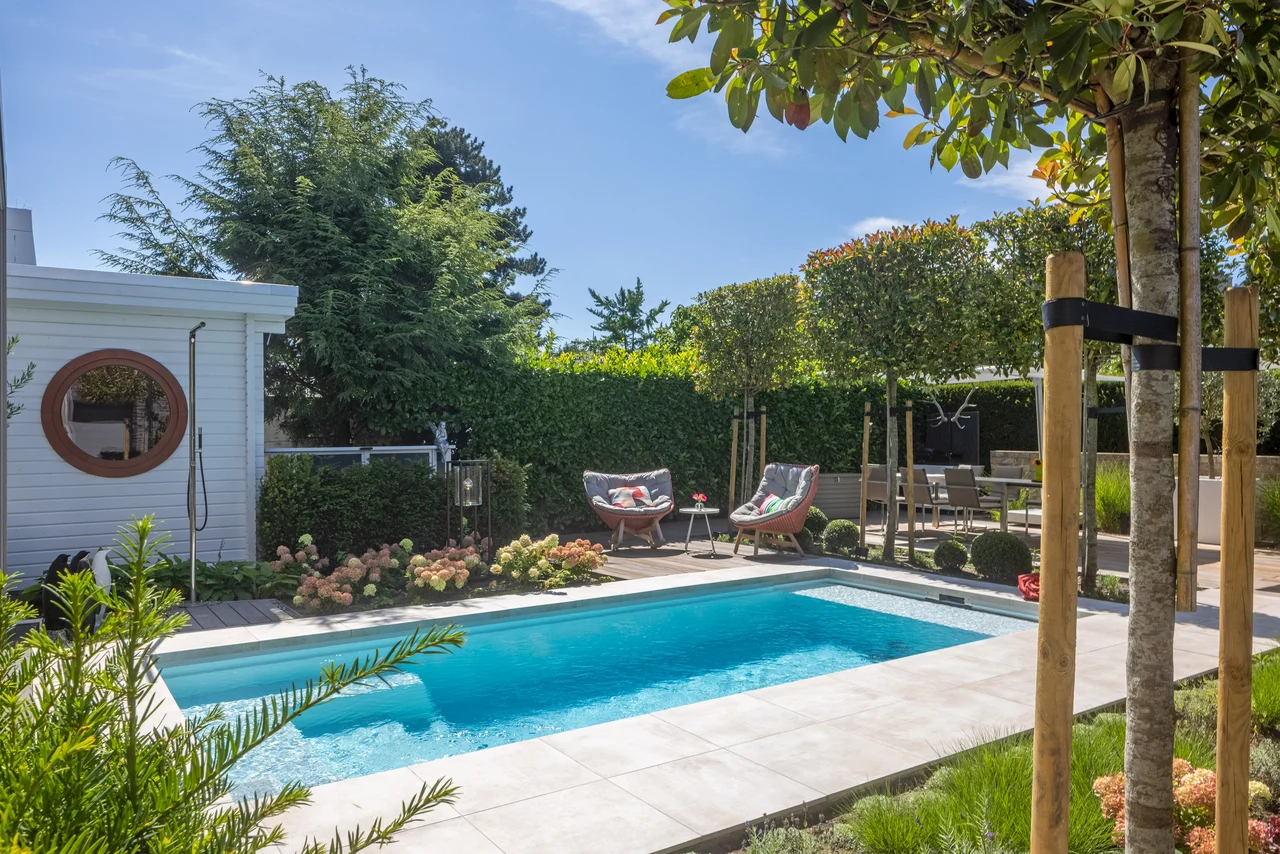
If you are planning a pool, a spa built into the pool design can share the same cover, enclosure or pool house. It is a lovely way to create a complete wellness space. Our article on having a pool and hot tub explores this idea.
Covered Jacuzzi Options at a Glance
- Insulated lid: essential for every tub, protects water when not in use.
- Gazebo: popular, flexible, can add sides and screens.
- Pergola or louvred roof: open feel with adjustable shelter.
- Sail shade: stylish sun protection, limited rain cover.
- Shelter or spa room: the most protection, a true outdoor room.
- Integrated with a pool: one covered wellness area for pool and spa.
Planning Your Covered Jacuzzi Area
Location
Choose a spot that is easy to reach from the house, especially on a cold evening. Think about privacy from neighbours, views across the garden and how close you are to a power supply. Avoid placing the tub directly under trees if you can.
A solid base
A filled hot tub with people in it is extremely heavy. It needs a level, strong base such as a concrete slab or a properly designed deck. If you are adding a structure over the top, its posts or frame will need suitable foundations too.
Height and clearance
Leave enough headroom to stand up and step in and out comfortably, and enough space to open the lid fully. If you use a cover lifter, allow room behind the tub for it.
Ventilation
Warm water creates steam and humidity. An open-sided gazebo or pergola copes with this easily. If you fully enclose your jacuzzi, you will need ventilation to stop condensation, mould and damage to timber.
Electrics
Hot tubs need a dedicated, properly protected electrical supply. Any work should be carried out by a qualified electrician, and lights or heaters in a gazebo should be rated for outdoor and wet areas.
Planning permission
Most garden gazebos and hot tub shelters fall within permitted development, but there are limits on height, size and how close they are to boundaries, and different rules apply to listed buildings and conservation areas. Our guide on whether you need planning permission for a hot tub explains more. If in doubt, check with your local council.
Making a Covered Jacuzzi Feel Special
- Lighting. Warm LED strips, lanterns or festoon lights create a relaxing mood.
- Screens and planting. Slatted screens, tall grasses and climbing plants add privacy and softness.
- Somewhere to sit. A bench or a couple of chairs for drying off or chatting with friends.
- Storage. Hooks for towels and robes, and a cupboard for chemicals and accessories.
- Heating. An outdoor heater makes getting out on a winter night much more pleasant.
- Flooring. Non-slip decking or tiles keep everyone safe around the tub.
Choosing Materials for Your Jacuzzi Shelter
- Timber. Warm and natural, and easy to blend into a garden. Choose pressure-treated or naturally durable wood and plan to treat it every year or two.
- Aluminium. Strong, sleek and very low maintenance. Powder-coated finishes come in many colours and suit modern homes.
- Steel. Very strong and slim, ideal for larger spans, but needs good protection against rust.
- Roofing. Polycarbonate lets light through, tiles or shingles give a cosy cabin feel and louvred aluminium gives you control over sun and rain.
Covered Jacuzzi Ideas for Different Gardens
Small gardens. Tuck the tub into a corner with a compact pergola and slatted screens on two sides. Built-in benches can double as storage.
Large gardens. Create a destination at the end of the garden with a timber shelter, outdoor kitchen or fire pit nearby and a path lit by low-level lights.
Modern homes. A flat-roofed aluminium pergola with a louvred roof and LED strip lighting looks crisp and contemporary.
Country gardens. An oak-framed gazebo with climbing roses or wisteria softens the structure and feels part of the landscape.
Alongside a pool. Position the jacuzzi so it overlooks the pool, with a shared terrace and a single covered area for loungers and the spa.
Safety Around a Covered Jacuzzi
Keep the lid locked when the tub is not in use, especially if children or pets visit. Use non-slip surfaces and add steps with a handrail if the tub is raised. Keep the water temperature sensible, take breaks during long soaks and avoid alcohol in the tub. Make sure outdoor lighting means everyone can see where they are stepping after dark.
Looking After a Covered Hot Tub
A roof makes life easier, but your jacuzzi still needs regular care. Keep the lid on whenever the tub is not in use, test and balance the water a couple of times a week, clean the filters regularly and drain and refill the tub every few months, depending on how much it is used. Clean the cover and the structure over it too, and check timber for any signs of damp.
Is a Covered Jacuzzi Worth It?
For most people, yes. A hot tub is a significant investment, and covering it means you get far more use from it. In the UK, the evenings when a warm soak feels best are often the cold, damp ones. A well-designed covered area makes those evenings something to look forward to, and it adds an attractive feature to your garden. If you are weighing up options, our guide to the outdoor hot tub is a good place to start.
Common Questions
Can you put a roof over a hot tub?
Yes. Gazebos, pergolas and shelters are all popular. Just make sure there is enough headroom, ventilation and space to open the lid.
Do I still need a hot tub cover if it is under a gazebo?
Yes. The lid keeps heat in and the water clean, and a lockable cover adds safety. The gazebo protects you while you use the tub.
Does covering a jacuzzi reduce running costs?
Sheltering the tub from wind and rain reduces heat loss, which can lower running costs, especially in winter.
Can a jacuzzi go indoors?
It can, but you will need a strong floor, good drainage, waterproof finishes and proper ventilation and dehumidification.
Create Your Perfect Covered Jacuzzi
A sheltered hot tub can become one of the most loved parts of your home, a place to unwind after work, catch up with friends or warm up after a swim. If you are planning a pool and spa, or would like advice on creating a covered wellness space in your garden, the HiLife Pools team would be delighted to help. Get in touch for a friendly chat, or explore more ideas on the HiLife Pools website.